
In this whole process, the company purchases supplies and the payment is either done in cash or credit. Artificial intelligence (AI) and machine learning (ML) are the latest advancements in this field, providing predictive analytics that can forecast cash flow needs and optimize payment timings. These technologies can analyze historical data and payment patterns to suggest the most opportune times to settle invoices, thereby improving the trade payables company’s cash management. AI can also detect fraudulent invoices by comparing them against known patterns, adding an additional layer of security to the payables process. In accounting, the trade payable is also known as accounts payable; hence these two terms, trade payable and accounts payable, are usually interchangeable with one another.
Technological Advancements in Payables Management

In contrast, Accounts Payable includes a wider range of debts, such as professional services, subscriptions, and maintenance costs. Contract management and negotiations are also critical when managing payables. Ensuring that all spend for a particular project obliges to the contracts is crucial and that any uncontracted spend should be dealt with accordingly. With BILL, you have a platform that automates invoice entry, simplifies approvals, and makes payments at the click of a button. By buying costs of fulfillment on credit, you open up new possible ways to control your cash flow.
- This can mean extending payment terms with suppliers or taking advantage of early payment discounts.
- Trade payables are typically recorded in the current liabilities section of a balance sheet.
- In most modern accounting systems, trade payables are automatically recorded and aggregated under Accounts Payable when an invoice is entered and matched with a purchase order.
- Timely and accurate payment of trade payables helps maintain strong relationships with suppliers.
- A high DPO can be a positive sign that a company is using its capital resourcefully, but if it’s too high, it may be struggling to make payments.
- When paid on credit, the company enters the billed amounts in the accounts payable module of their accounting software or balance sheet.
Best practices for effective trade payables management
In this case, the payable party can recognize the canceled balance as other income because of reduced cash outflows and because it is not related to the company’s primary operations. This account payable is discharged from the company’s financial statements when the company makes the payment to its supplier. For example, the company purchased computers amounting to $4,000 on credit on 15 Dember 2019 from its local supplier. The company financial statements record the account payable amount of $4,000.
Corporate and Business Law (LW)
On the other hand, you typically enter non-trades payable into the system using a journal entry. https://www.topell.nl/2024/04/30/understanding-accounts-payable-ap-with-examples/ Ask any modern business decision-makers about the essence of trade accounts payable, and you’ll soon realize that it’s one of the greatest tasks they face. After all, businesses must pay their debts, and they cannot afford to get this wrong. When used responsibly, the benefits of trade payables tend to outweigh the risks. Companies can also lean on technology to mitigate the risks and accentuate the benefits.
By way of example, consider a retail company that negotiates 90-day payment terms with its suppliers but turns over its inventory every 30 days. This allows the retailer to sell goods and collect cash from customers well before the payment to suppliers is due, effectively using the trade payables as an interest-free loan to fund operations. However, if the retailer fails to manage this process effectively, it could lead to a cash crunch when suppliers demand payment. Once the business pays the supplier, the trade payables account decreases, reducing the liability. Concurrently, the cash account also decreases, reflecting the cash outflow. This accounting treatment ensures a company’s financial records accurately reflect its obligations and cash position.
When Should Trade Payable Derecognise From Balance Sheet?
Entrepreneurship is the process of creating, launching, and managing a new venture that offers a… In the rapidly evolving landscape of business security, the advent of electronic protection… Omissions in entries, wrong figures, improper adjustments are all due to lack of clarity and knowledge. These mistakes are very difficult to pinpoint because no one has time to recheck everything from the start. Therefore, another potential risk to mitigate when dealing with Trade Payables is to get conceptual and practical clarity. Therefore, external and internal frauds risks are always prevailing when you deal with Trade Payable accounts.
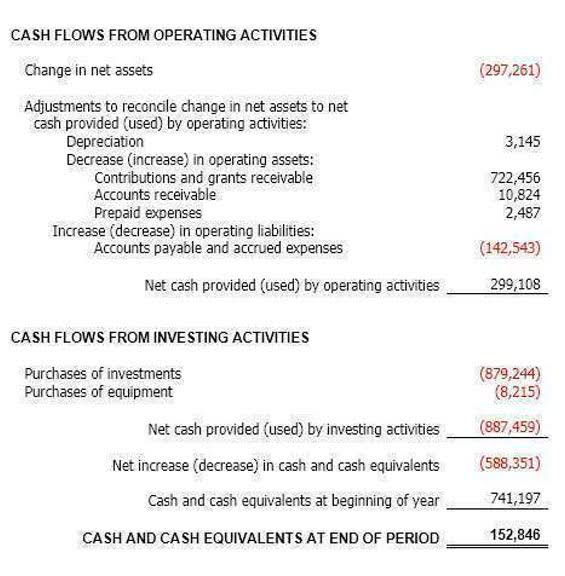
The key is to understand the unique needs and opportunities of the business and to tailor the payables strategies accordingly. This not only maximizes cash flow but also strengthens the overall financial health of the company. From the perspective of cash flow management, trade payables serve as a form of interest-free financing.
Effective management of trade payables is important for a business’s financial stability and operational continuity. It directly impacts a company’s cash flow, allowing businesses to strategically schedule payments and retain cash longer for other operational needs or investments. This optimizes cash flow, for instance, by enabling a Outsource Invoicing business to sell inventory before paying its supplier. Trade payables or trade accounts payable refer to the money organizations owe other businesses for purchasing products and services on credit.
Leave a Reply